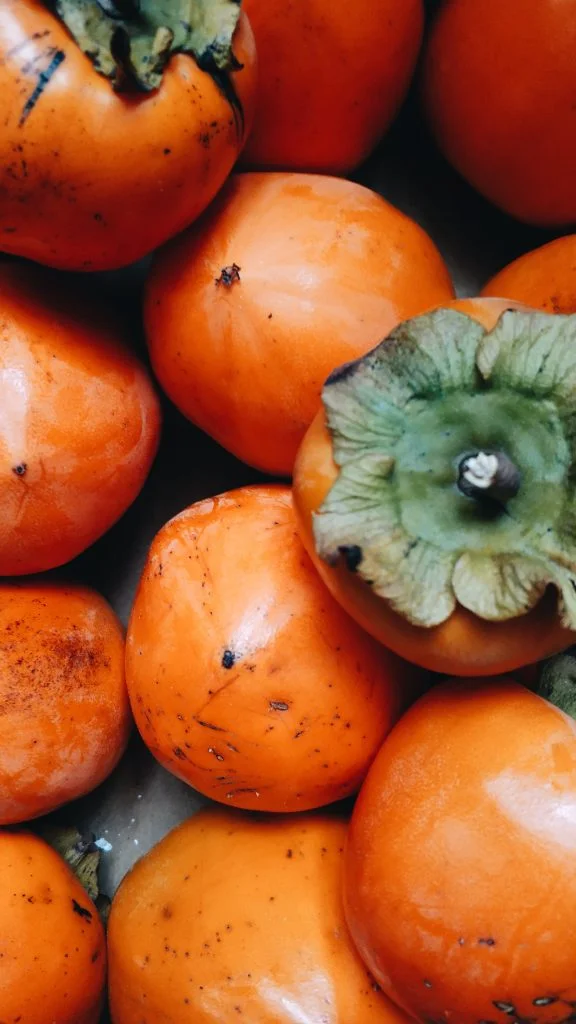
Persimmon originates in China and Japan and is known as the “fruit of divine fire”. Its scientific name is Diospyros kaki, and it belongs to the Ebenaceae family. It resembles a tomato, with a more orange or reddish colour and very sweet, juicy, jelly-like flesh.
It can be eaten fresh, on its own or with other ingredients, or used in desserts such as jellies, ice creams, tarts and smoothies. An autumn fruit, it is available in markets from September to December.
Nutritional properties
Persimmon is a nutritious, energy-providing fruit containing about 65 kcal per 100 grams. Water is its main component, accounting for 80% of its weight, followed by carbohydrates, mainly fructose and glucose. It also contains plant proteins and very little fat.
Its vitamins include vitamin A, or beta-carotene, which gives it its orange colour and has strong antioxidant activity. It also provides vitamin C, supporting immunity and collagen formation, and B vitamins such as B3, B6 and folic acid.
Among its minerals, persimmon is rich in potassium, helping regulate blood pressure and fluid balance. It also contains calcium, phosphorus, magnesium, iodine, sodium, selenium and iron.
It is a good source of soluble fibre, improving bowel transit and reducing cholesterol. Its fibre consists of pectin and mucilage, with a laxative effect when the fruit is ripe and an astringent effect when unripe because of its tannins.
Benefits of eating persimmon
Its nutritional and antioxidant properties offer several health benefits, including:
- Cardiovascular protection: it helps prevent and combat cardiovascular disease by reducing cholesterol, regulating blood pressure, improving circulation and preventing blood clots.
- Cell protection: its antioxidants, including beta-carotene and vitamin C, protect cells from free-radical damage associated with ageing and certain degenerative diseases.
- Fighting viruses: vitamin C and tannins give it antiviral properties that inhibit replication of certain viruses, such as influenza and herpes viruses.
- Increased energy: its natural sugars are rapidly absorbed, supplying fuel for the brain and muscles. It is suitable for children, athletes and people doing demanding physical work.
- Supporting eyesight: vitamin A and beta-carotene improve night vision, prevent dry eyes and protect the retina from ultraviolet radiation.
- Skin benefits: vitamin A and beta-carotene stimulate melanin production, providing colour and protection, while vitamin C and collagen help maintain elasticity and firmness. Persimmon also has wound-healing and anti-inflammatory properties that help with wounds, burns and skin conditions.
How to eat persimmon
The way to eat persimmons depends on ripeness and variety. There are two main types: astringent and non-astringent. Astringent varieties contain more tannins and create a dry feeling in the mouth when unripe. Non-astringent varieties contain fewer tannins and can be eaten at any stage.
Astringent persimmons should be eaten when very ripe and almost soft, so they lose their harshness. Halve them and eat with a spoon, or peel and chop them. They can also be frozen and eaten like a natural ice cream.
Non-astringent persimmons can be eaten firm, like an apple, or soft, like a pear. Peel them or eat the skin according to preference, and cut them into slices, wedges or cubes.
Combine them with yoghurt, cheese, nuts, honey, cinnamon, chocolate or cream. They can also be used in desserts such as tarts, cakes, custards, mousses and creams.
Sources
To learn more about persimmons, I recommend these sources:
- Persimmon: nutritional properties and health benefits — Ecoagricultor
- Persimmon: properties and health benefits — Cuerpomente
- Persimmon: health benefits, properties and uses
I hope you enjoyed this article and feel inspired to try this fruit with its many benefits. See you soon!